
Wageningen University & Research (WUR) Validates Veridi’s Breakthrough in AI-Based Nematode Identification
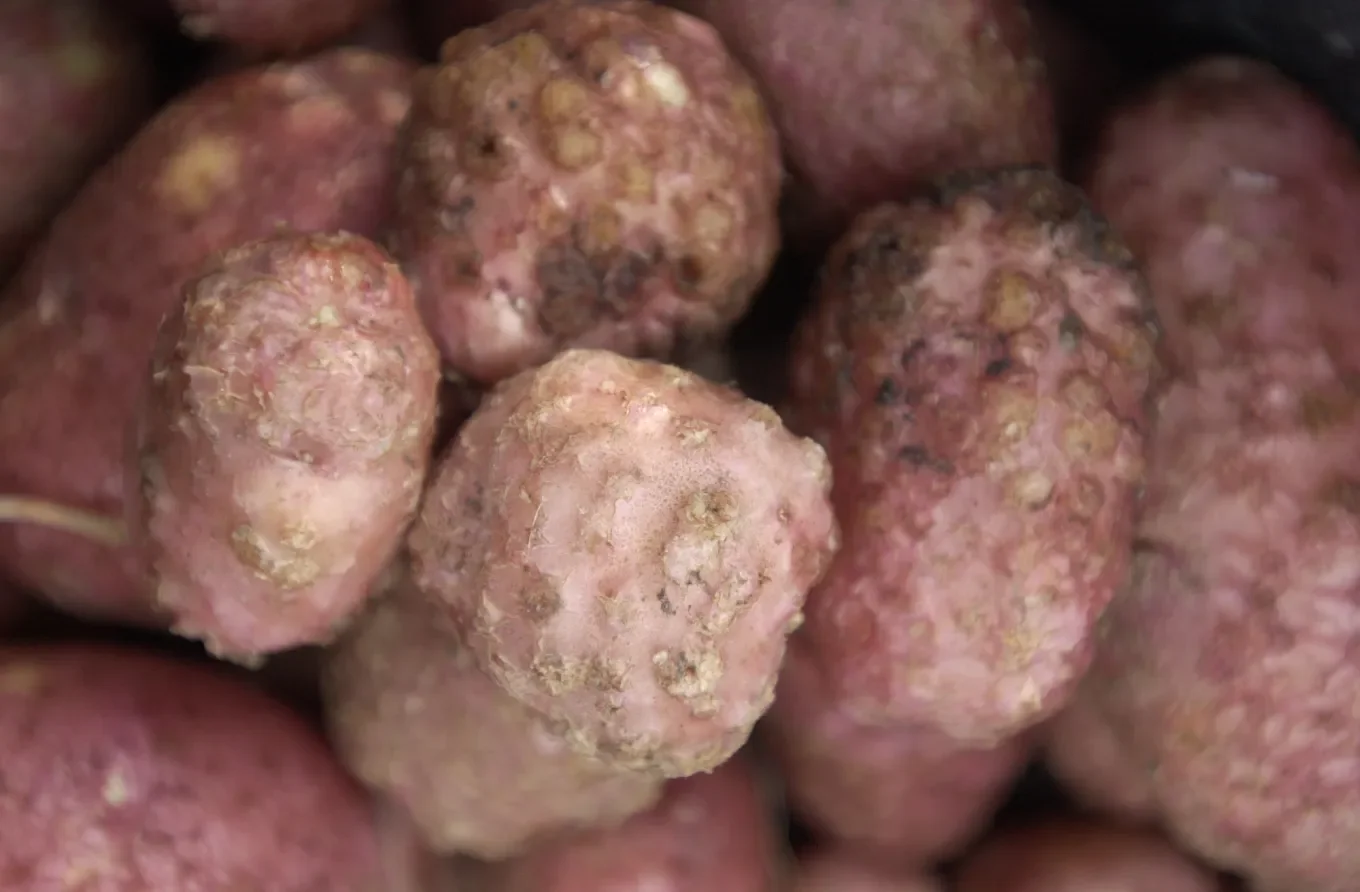
Potato tubers deformed by Meloidygne Chitwoodi (Source: WUR)
In collaboration with Wageningen University & Research (WUR), a major milestone has been achieved in AI based nematode diagnostics.
Veridi is the first and only company to master high throughput nematode species diagnostics through AI, machine learning and automated robotic microscopy. With demonstrated accuracy levels of 95%, our proprietary platform, called the NEMASCOPE™, is positioned to become a key enabler for growers and the wider ag tech industry in addressing a problem that affects an estimated 10% of global agricultural output.
The Bottleneck in Nematode Ecology Analysis
Accurate nematode species identification has long been one of the most complex challenges in agricultural diagnostics. It traditionally depends on highly specialised expertise and manual microscopy, available in only a limited number of specialised laboratories worldwide. Morphological differences between species can be extremely subtle, making nematode ecology assessments time intensive and limiting and demanding even to experienced taxonomists.
Applying AI to One of the Most Difficult Species
The joint research effort focused on training an AI powered system to recognise one of the most challenging species, Meloidogyne chitwoodi, commonly known as the Columbia root knot nematode (RKN). This species is notoriously difficult to distinguish from closely related species such as Meloidogyne fallax, even for trained specialists.
By combining WUR’s morphological expertise with Veridi’s unique technological platform, the NEMASCOPE™ demonstrated the ability to identify M. chitwoodi through microscope imagery with 96% accuracy. In controlled validation tests, its performance matched that of an experienced taxonomic nematologist, demonstrating that AI can replicate expert level identification while operating at scale.
Unlocking Scalable Soil Health Diagnostics
This breakthrough carries significant implications for sustainable agriculture. Until now, diagnostic bottlenecks have limited farmers’ access to reliable, affordable species level data. This advancement opens the door to scalable, field ready deployment of soil health diagnostics grounded in nematode based indices.
We extend our sincere thanks to the researchers at Wageningen University & Research for their scientific partnership and long standing support, and to the European Innovation Council and SMEs Executive Agency for catalytic funding that helped transform this vision into reality.
Read the full article on the Wageningen University & Research website. For more updates, follow us on LinkedIn
