
Interview with Ziad Matar, Founder and CEO of Veridi
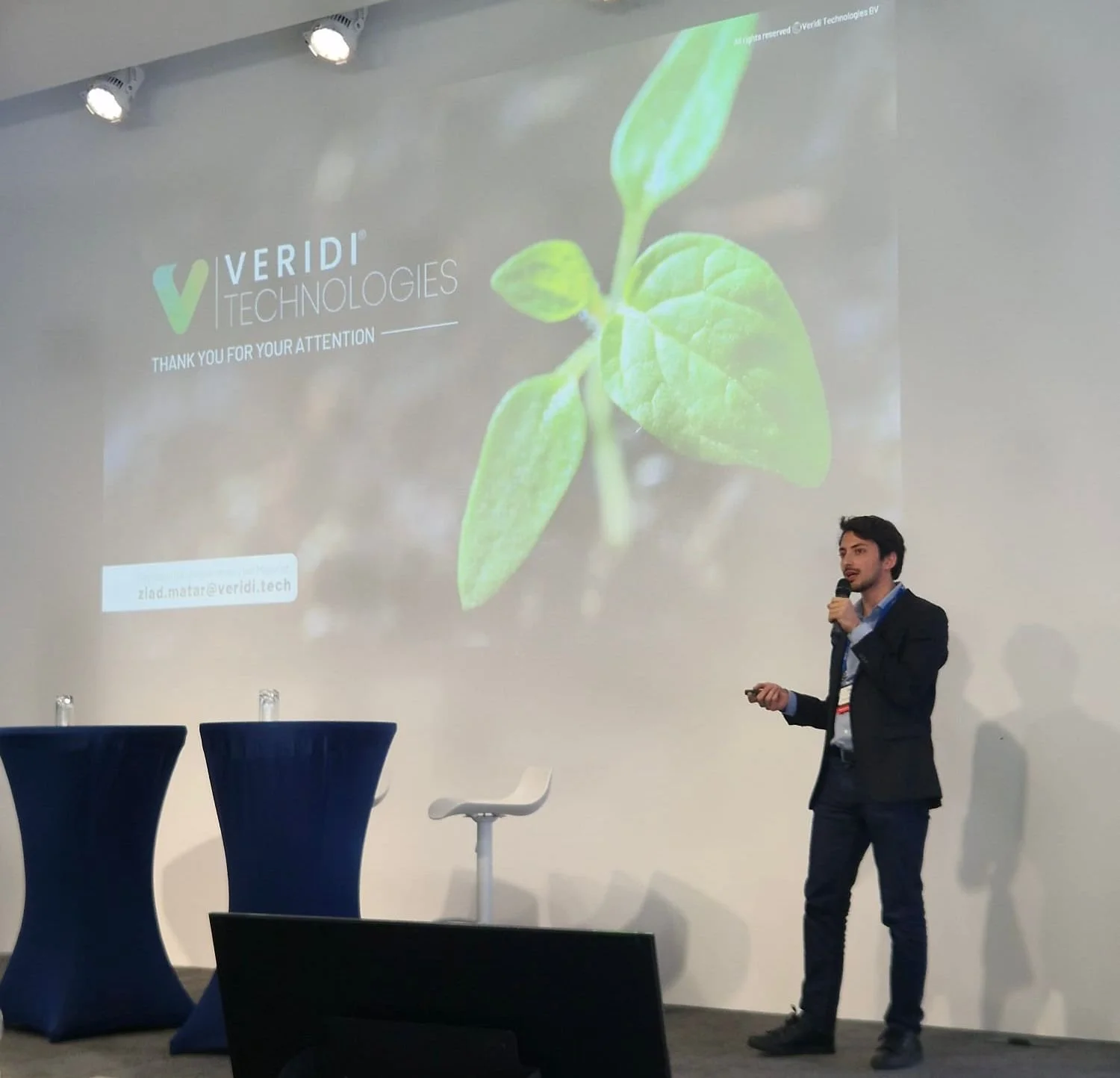
Pictured above: Ziad Matar, CEO and CO-founder of Veridi
Making soil healthy worldwide
Driven researcher and entrepreneur ir. Ziad Matar studied at the University of Groningen and Delft University of Technology. Before joining Veridi Technologies, he worked for companies such as Nestlé, PwC, and Danone. Those experiences support him in the technical and economic development of Veridi.
How did Veridi come about?
Veridi originated from a shared interest between Richard Janissen, our co-founder and CTO, and myself in sustainable agriculture and digital technologies for assessing soil health. We both recognized a clear gap in how soil biodiversity was being measured and valued. That mutual interest gradually evolved into a concrete idea, ultimately leading to the founding of Veridi.
What are your goals? Where will Veridi be in five years?
Over the next five years, we aim to build a team of around 30 people and contribute to measuring and restoring soil. We are on a path toward making soil healthy worldwide– ultimately targeting one million hectares. Our focus is on scaling soil biodiversity monitoring using our patented, AI-driven system for nematode analysis.
With regulatory developments such as EU legislation on soil monitoring, growing commitment of major agricultural companies, and increasing interest from financial institutions, we see an opportunity to better align environmental and economic incentives. In practice, this means shifting toward biological crop protection and resistant varieties instead of relying on non-targeted chemical pesticides. At the same time, we aim to create better financial conditions for farmers who actively protect soil biodiversity. This will also lead to more resilient production systems.
In the long term, our goal is for our organization to positively transform the agricultural system while remaining economically sustainable.
Have you already achieved milestones you are proud of?
In 2025, we received the EIC Accelerator grant of €2.5 million–an important milestone and strong validation of our direction. We have also begun our commercial expansion into the Americas and Asia, where we have launched pilot projects with leading players in the agricultural sector. In Asia, Veridi has the support and is endorsed by the government of Singapore. These partnerships help us refine and scale our technology. With the results of the WUR trial, we feel we are steadily building momentum and transitioning from validation to implementation.
What are you currently working on?
Validated by WUR, our AI microscopy platform is the first and only platform capable of identifying root-knot nematode species with 95% accuracy. Building on these exceptional test results, we are expanding into other common nematode pests and developing diagnostic methods to assess overall soil health and biodiversity.
From which direction do you expect support?
We already receive support from several major agricultural companies and financial institutions. Multiple governments such as the South African Government, have shown us support as well. Also, we have been recognized by the European Innovation Council as a key driver of the EU Soil Monitoring Law. We expect continued collaboration with industry partners, financial actors, and policymakers. Policy alignment is particularly important if soil biodiversity monitoring is to become standard practice across Europe and beyond. Veridi is now considered a global reference for these topics and moderated, for example, the regenerative agriculture panel at the Forum of Latin American Impact Investors.
A Special Veridi Offer for Prospective Customers
We are developing an accessible and financially attractive way for customers to become acquainted with our equipment.
This involves offering the platform free of charge to customers. The hardware is installed for a modest fee. After a short and simple training session, the customer’s staff can operate the equipment independently.
In addition, we plan to make our AI microscopy platform available to laboratories and agricultural advisory firms free of charge on a pay-per-use basis. In short: the customer pays only when the system is used. This model increases affordability and flexibility.
For more updates, follow us on LinkedIn
